
Python vs JavaScript for Beginners: Which Should You Learn First in 2026?
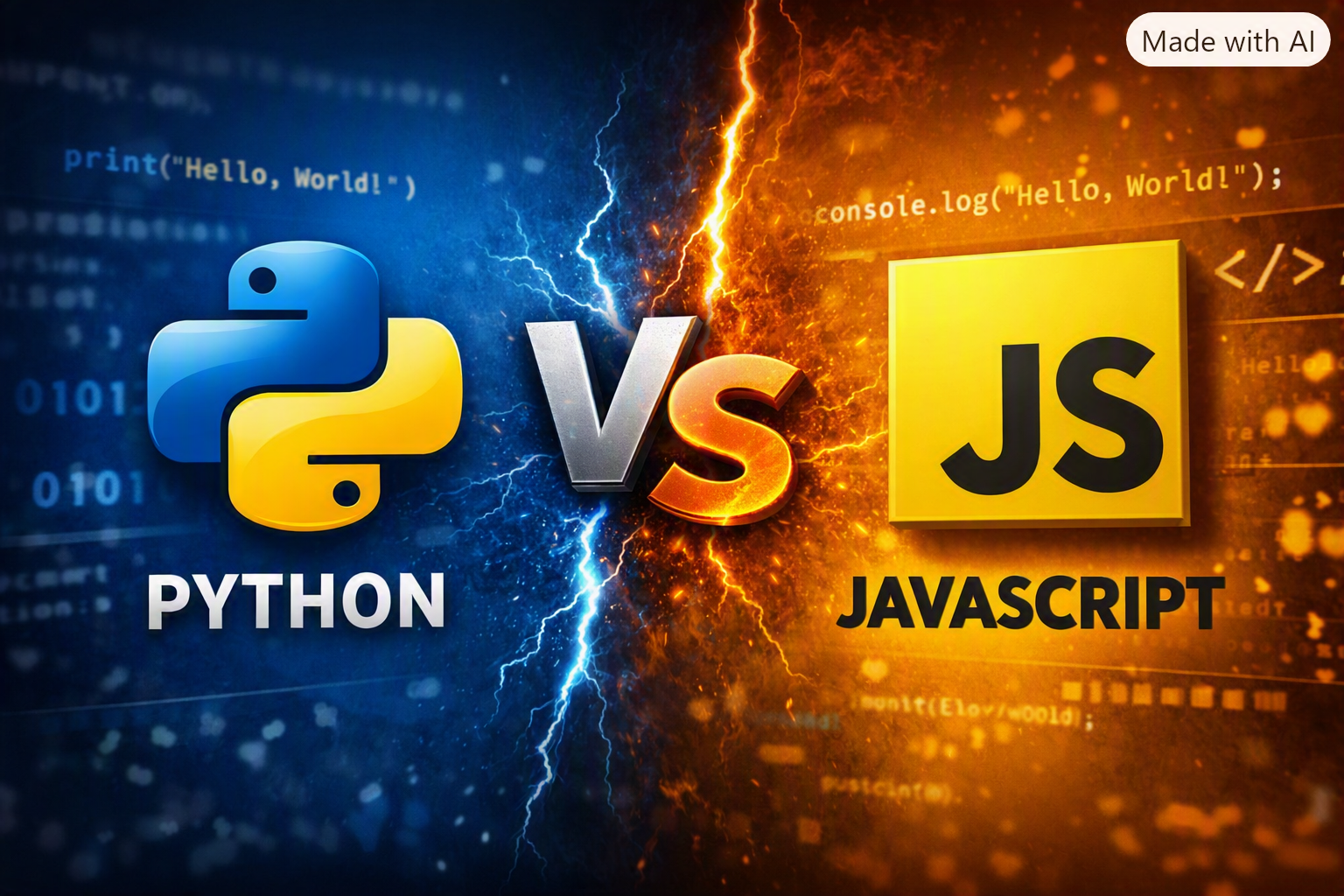
If you're just starting your coding journey, you've probably run into this question at least a dozen times: should I learn Python or JavaScript first?
Both languages are beginner-friendly, both are in massive demand, and both open the door to countless career paths. But choosing the wrong one for your goals can slow you down. Let's break it down so you can make a confident decision.
By the end of this guide, you'll have a clear answer__ not based on hype or trends, but on what actually fit your goals, interests, and the kind of project you want to build.
What Makes Python Great for Beginners
Python is often called the easiest programming language to learn — and for good reason. Its syntax reads almost like plain English, which means you spend less time fighting confusing symbols and more time actually understanding how programming works.
Python is the go-to language for:
Data Science & AI/Machine Learning
Automation & scripting
Backend web development
Academic and research projects
If you're interested in AI, data analysis, or just want the gentlest possible introduction to coding logic, Python is hard to beat. You can explore the official docs and beginner tutorials at Python.org.
print (" Hello, World!")
name = ("What is your name")
print (f"Nice to meet you, {name}!")
What Makes JavaScript Great for Beginners
JavaScript is the language of the web. Every interactive website you've ever used — buttons that click, forms that validate, animations that move — relies on JavaScript.
JavaScript is the go-to language for:
Frontend web development (what users see and interact with)
Full-stack development (with Node.js on the backend too)
Building web apps, browser extensions, and even mobile apps
If your dream is to build websites and see your work come to life visually in a browser, JavaScript gives you that instant, visual feedback loop that keeps many beginners motivated. MDN Web Docs is the best free resource to start learning it properly.
console.log ("Hello, World!");
let name = prompt ("What is your name?");
console.log (Nice to meet you, ${name}!);
Key Differences at a Glance
| Factor | Python | JavaScript |
|---|---|---|
| Learning curve | Easier syntax, beginner-friendly | Slightly steeper, more symbol/rules |
| Best for | AI, data automation, backend | Web design, interactivity, full stack |
| Where it runs | Anywhere (via interpreter) | Primarily in the browser (and server via Node.js) |
| Job demand | High, especially in AI/data | High, especially in web design |
| Community & resources | Huge, beginner focused | Huge, web focused |
Which One Should You Learn First?
Here's the honest answer: it depends on your goal, not on which language is "better."
Choose Python if you're drawn to AI, automation, data analysis, or just want the smoothest possible entry into programming logic.
Choose JavaScript if you're excited about building visual, interactive websites and want to see your code come to life on a screen right away.
There's no wrong choice here — both languages will teach you how to think like a programmer, and both can lead to solid careers. The real key isn't which language you pick; it's staying consistent once you do.
Common Mistakes Beginners Make
Whichever language you pick, watch out for these traps:
Jumping between languages too soon — switching to a "new shiny language" every few weeks resets your progress. Stick with one for at least 2-3 months.
Learning syntax without building anything — watching tutorials feels productive, but real learning happens when you build small projects.
Comparing your progress to others online — everyone's timeline is different. Consistency matters more than speed.
Skipping the basics to chase advanced topics — trying to learn AI or frameworks before understanding core logic (loops, functions, conditionals) usually backfires.
How Long Does It Take to Learn Each Language?
Python: Most beginners feel comfortable with the basics in 4-8 weeks of consistent practice (a few hours a week). Getting genuinely productive for small projects usually takes 2-3 months.
JavaScript: Basic syntax can be picked up in a similar 4-8 weeks, but because it's tied closely to HTML/CSS for web projects, feeling "productive" often takes a bit longer — around 3-4 months — since you're learning three things somewhat together.
These timelines vary a lot based on how much time you dedicate and whether you're building real projects alongside learning.
Frequently Asked Questions
Can I learn Python and JavaScript together?
It's possible but not recommended for absolute beginners. Learning one language deeply first builds a mental model of how programming works, which makes the second language much easier to pick up later.
Which language pays better for beginners?
Both have strong entry-level opportunities. Python tends to lead in data/AI-related roles, while JavaScript dominates web development job postings. Location and specialization matter more than the language itself.
Do I need a computer science degree to learn either language?
No. Both Python and JavaScript are widely taught through free resources, and plenty of successful developers are self-taught.
Which one is better for building AI projects?
Python, by a wide margin. Nearly all major AI/ML libraries (like TensorFlow and Torch) are Python based.
What projects can I build as a complete beginner?
With Python, you can start with a simple calculator, a to-do list app or a number guessing game. With JavaScript, beginner-friendly projects include a to-do list in the browser, a simple quiz app or an interesting calculator using HTML and CSS. Both let you apply what you learn within first few weeks.
Is there strong demand for Python and JavaScript developers in Pakistan?
Yes. Both languages are in high demand on local freelancing platforms and in Pakistan's growing in tech industry. Python popular for data and automation roles, while JavaScript dominates web developer gigs
especially on platforms like Fiver and Upwork, where beginner-friendly projects are easy to find.
My Take
I chose to start with Python — not because JavaScript is harder, but because my interest leans toward automation and AI-powered projects rather than building visual interfaces from scratch. That decision made learning feel natural instead of forced, and that's honestly the biggest factor: pick the language that matches what excites you, because that excitement is what keeps you consistent on the hard days.
Next steps
Ready to actually start? Pick whichever language matched your goal above, then commit to writing code every single day even if it's just 15 minutes. Don't just watch tutorials; open the editor and build something small like a simple calculator or a to-do list. That one habit matter more than which language you pick.
"Which one are you starting with__ drop it in the comments!"